

It may require a lawyer to go through several dozens of documents, investigate case law, locate pertinent precedents, and write a legal memo before the deadline.
Even the language could be daunting to a person dealing with a contract or any type of issue in court.
The simplification of such functions, the search of the legal sources, abstracting documents, organizing research, and drafting can be offered by an AI legal assistant.
The biggest advantage to law firms is that there is minimal repetitive work and the attorneys are left with legal analysis and client strategy.
However, not all legal AI tools are the same. Some of them specialize in legal research, but there are those, which serve to aid in the inspection of documents, contract research, or even the overall legal procedure.
The following five artificial intelligence (AI) legal assistant software solutions are worth considering for U.S.-based individuals and law firms, with their applications, benefits, and drawbacks being put into special emphasis.
Key Takeaways
- The legal AI assistant can facilitate research, document analysis, drafting, and analysis of any contract but the results presented need to be verified.
- vLex Vincent AI and Paxton AI focus on legal research and analysis.
- Spellbook does contract reviews and contract drafting.
- Clearbrief assists legal practitioners in linking written arguments with supporting evidence.
- Harvey advocates the broader legal process of the professional services firms and law firms.
- The people are advised to tell the difference between legal knowledge and individual legal advice and seek the services of an attorney during consequential decisions.
5 AI Legal Assistants Compared
| Tool | Best for | Main capability |
| vLex Vincent AI | Legal research | Case law and legal analysis |
| Paxton AI | Small and midsize law firms | Research, drafting, document analysis |
| Spellbook | Contract lawyers | Contract drafting and review |
| Clearbrief | Litigation teams | Evidence verification and legal writing |
| Harvey | Large law firms and legal departments | Complex legal workflows |
1. vLex Vincent AI
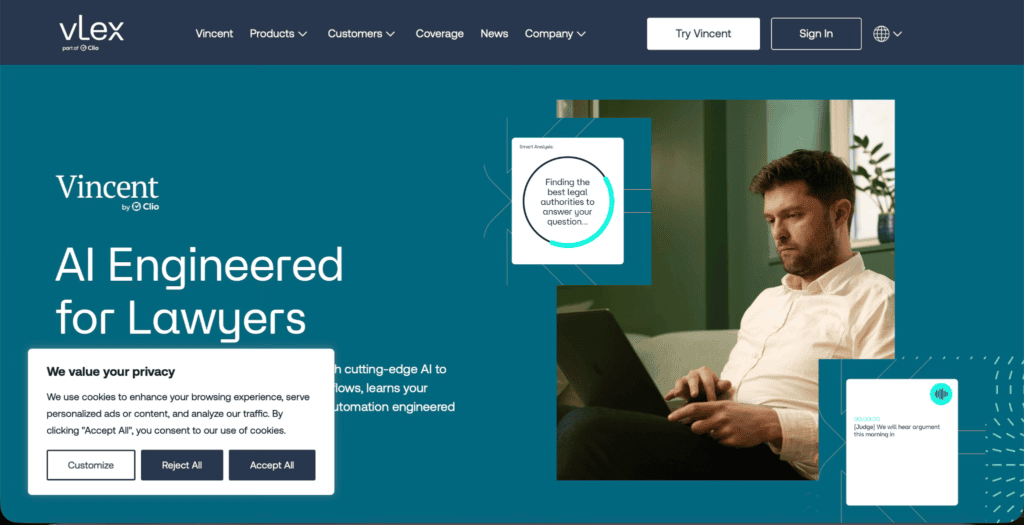
Best for: Lawyers requiring legal case analysis and research supported by AI.
The Vincent AI of vLex aids legal specialists in obtaining answers to legal issues, interpreting documents, and locating authorities of interest.
It bases its research on the legal content of vLex, enabling lawyers to research matters and construct arguments based on supportive sources. Explore the platform at vLex.
How I evaluated this tool
I evaluated its appropriateness in response to a research project where the legal question, and the supporting authorities include a case law as well.
Its primary benefit lies in being able to bridge AI-supported analysis and legal research materials. Cited decisions should also be opened and checked by the attorneys, and their Jurisdiction and whether they are still good law.
2. Paxton AI
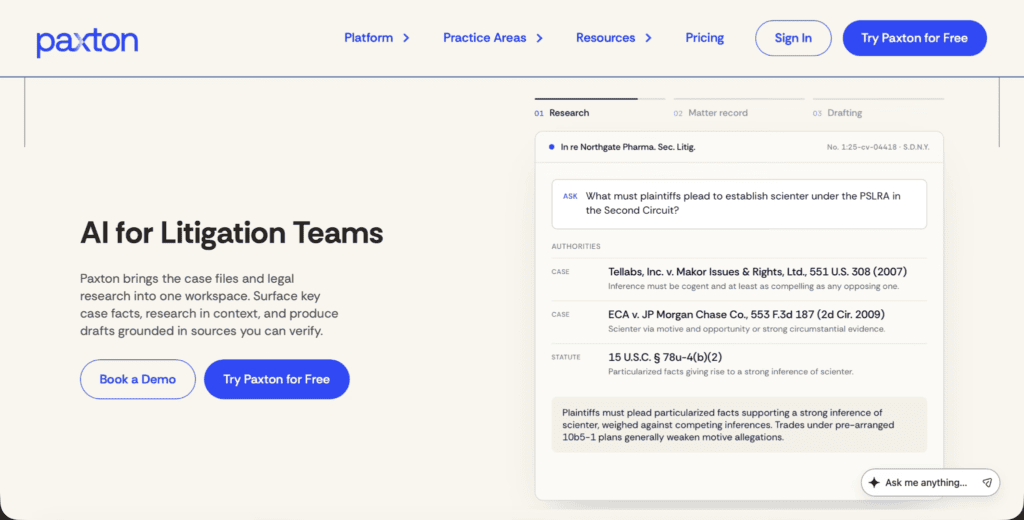
Best for: Small and medium law firms in need of a convenient legal AI workspace.
Paxton AI aids in legal research and analysis of documents, drafting and summarization.
It is created to assist legal experts in handling legal queries and paperwork without constructing a complex AI processing chain. Visit Paxton AI.
How I evaluated this tool
I thought of a typical minor workflow: going through a client document, doing some research on a legal matter, and creating a first draft.
Paxton is worth consideration in those firms which require two or more legal activities in the same environment.
Prior to taking it up, test source citations, document limits, confidentiality safeguards and confirm the related U.S. jurisdiction.
3. Spellbook
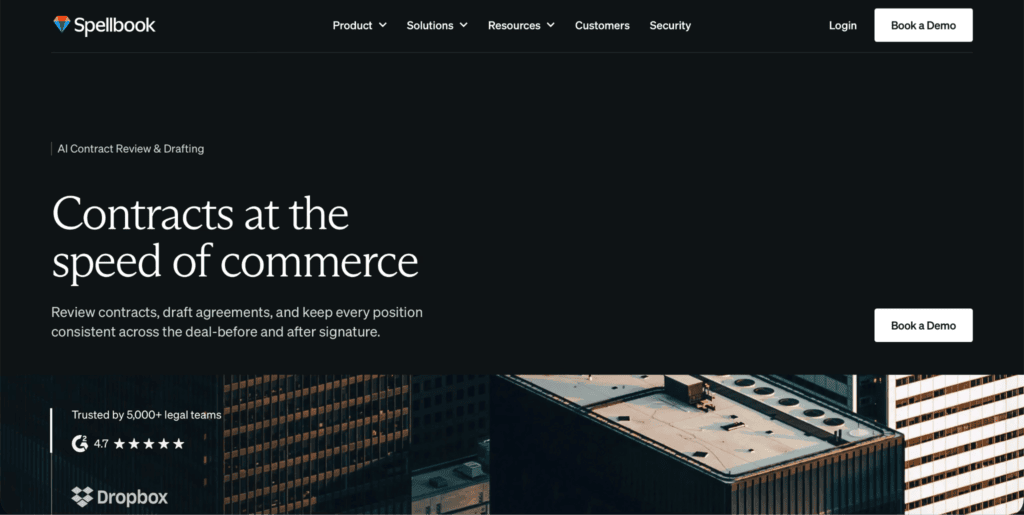
Best for: Contract attorneys and legal teams handling frequent agreement reviews.
Spellbook is used in Microsoft Word to assist lawyers in creating, revising, and auditing contracts.
It is able to find out potentially problematic clauses, propose language and to help with questions about the contract. Its workflow is specifically applicable to commercial contracts and regular contract negotiations. Visit Spellbook.
How I evaluated this tool
I evaluated it with regards to going through a draft contract and determining points to examine and suggest alterations.
Its Word based workflow can minimize interchange of applications.
However, the identified changes that should be made should be cross-examined with the actual agreement, negotiation goals, case regulations, and the level of risk that a client can afford.
4. Clearbrief
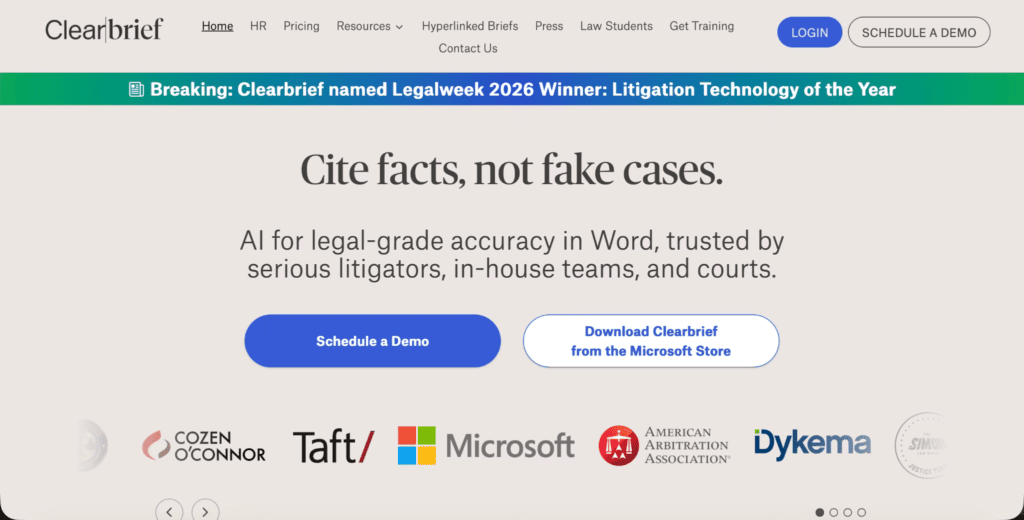
Best for: Litigation attorneys who need to connect legal arguments with supporting evidence.
Clearbrief is legal writing and evidence oriented.
Its tools assist the attorneys in finding supporting passages in the documents, matching factual statements with source material, and checking citations in legal filings.
This is especially applicable to litigation teams that prepare motions, briefs, and other evidence-heavy documents. Visit Clearbrief.
How I evaluated this tool
I have taken a scenario of a litigation process where a lawyer has to authenticate factual assertions by a huge amount of records.
The evidence-based process that Clearbrief has to offer can assist in streamlining that process.
It does not take the place of the duty of the attorney to ensure that all quotations, facts and citations are correct supplements to an argument.
5. Harvey
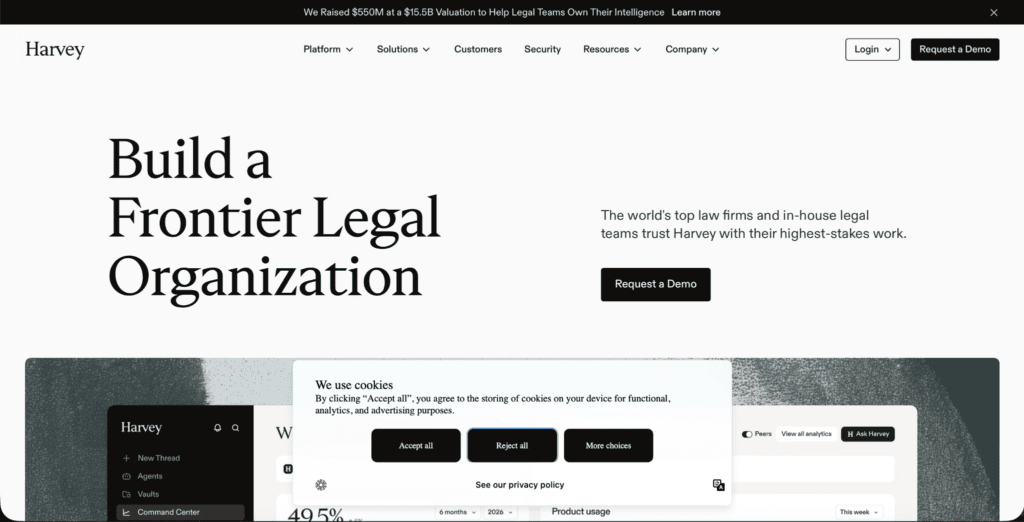
Best for: Large law firms and corporate legal departments managing complex matters.
Harvey offers AI services to research legal laws, analyze legal documents, write and support additional legal processes.
It is targeted at professional legal settings where a group of professionals operates with large volumes of information and requires repeatability of processes.
Its business orientation renders it applicable to the companies involved in handling transactions, investigations, and complicated legal issues. Visit Harvey.
How I evaluated this tool
I evaluated its capability for a multi-stage legal process of document review, research and drafting.
Harvey would be quite applicable in cases when a company requires AI assistance in multiple areas of practice instead of having a dedicated single-purpose assistant.
Potential clients may be curious about their deployment requirements, authorization, integrations, and the capability of the platform to work with confidential client data.
How to Choose the Best AI Legal Assistant
Begin with the task that takes the longest time. For case law research, compare vLex Vincent AI and Paxton AI. Spellbook is a more specialized tool in the case of contract review.
The evidence-oriented workflow of Clearbrief can be useful to litigation teams, whereas larger companies can consider Harvey to immerse in wider legal work.
Before selecting AI legal assistant software, carry out a pilot using sample documents and real-life questions.
Test whether the system perceives the correct jurisdiction and provides citable sources, separates facts and assumptions, and identifies doubt.
For U.S. legal professionals, the American Bar Association’s Formal Opinion 512 addresses the issue of differences in the professional duty of lawyers that use generative AI, namely competence, confidentiality, communication, and reasonable charges. The use of AI does not eliminate such duties.
Final Thoughts
The best AI legal assistant will be based on the task you have to accomplish.
vLex Vincent AI and Paxton AI are used to aid research, Spellbook is used to aid contracts, Clearbrief helps in the connection between writing and evidence in the legal field and Harvey supports the more extended parts of the law.
The best solution is the smartest one to begin with a single clearly defined task and test the platform against reliable sources of law and retain a professional with the necessary qualifications to make consequential decisions.