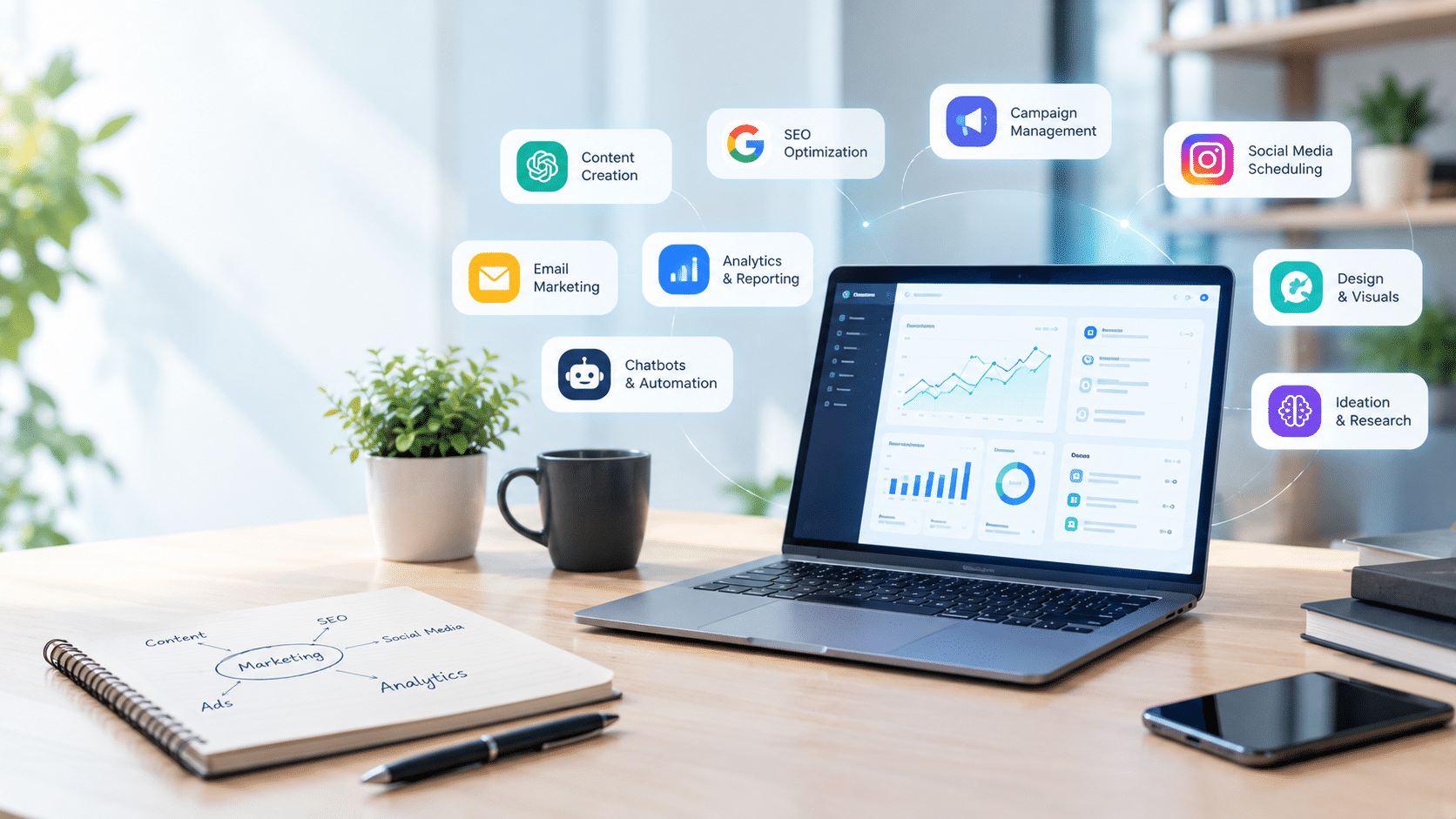
Typically it begins with one very basic marketing activity: write an email.
They are followed by the social post, landing page, ad copy, blog brief, campaign report, keyword research, and creative assets.
Marketers are soon switching between six or seven platforms just to roll out a single campaign.
This is what makes AI marketing tools an important aspect of today’s marketing processes.
They can assist teams to brainstorm, create content, analyze campaigns, optimize SEO as well as repurpose existing assets.
The global market revenues of AI usage in marketing are anticipated to reach approximately 47 billion U.S. dollars in 2025 and are projected to exceed 107 billion by 2028.
Nonetheless, all AI tools do not address the same issue. Others are pure content-based and others are a combination of AI with CRM, SEO, social media or design.
Here are 10 best AI tools for marketing in the year 2026 which include both free and paid marketing options.
Key Takeaways
- The best AI marketing tools are determined by whether you require content, SEO, social media, design, analytics, or automating campaigns.
- Several platforms offer free plans, but more sophisticated services are often paid.
- Jasper and Copy.ai are especially oriented on the marketing of the content and workflows.
- HubSpot introduces AI to CRM, campaign planning, content, and customer data.
- Marketers who have to make visual campaigns can use Canva and Adobe Express.
- Semrush and Surfer fit more into the marketing team that focuses on SEO.
- Grammarly and Buffer can enhance and amplify daily marketing content.
- ChatGPT is able to assist with marketing tasks such as brainstorming and research, and even content creation and analysis of performance.
Comparison of the Best AI Marketing Tools
| Tool | Best For | Free Option | Main Marketing Use |
| Jasper | Marketing teams | Free trial | Campaign and brand content |
| Copy.ai | GTM workflows | Limited/free access | Content and workflow automation |
| HubSpot Breeze | CRM-based marketing | Yes | Campaigns, content, customer data |
| Canva | Visual marketing | Yes | Graphics, ads, social content |
| Adobe Express | Creative content | Yes | Social and visual campaigns |
| Semrush | SEO and AI visibility | Limited | SEO, research, AI search |
| Surfer | Content SEO | Trial | Content optimization |
| Grammarly | Marketing writing | Yes | Editing, tone, brand voice |
| Buffer | Social media | Yes | Content creation and scheduling |
| ChatGPT | General marketing | Yes | Strategy, content, analysis |
1. Jasper
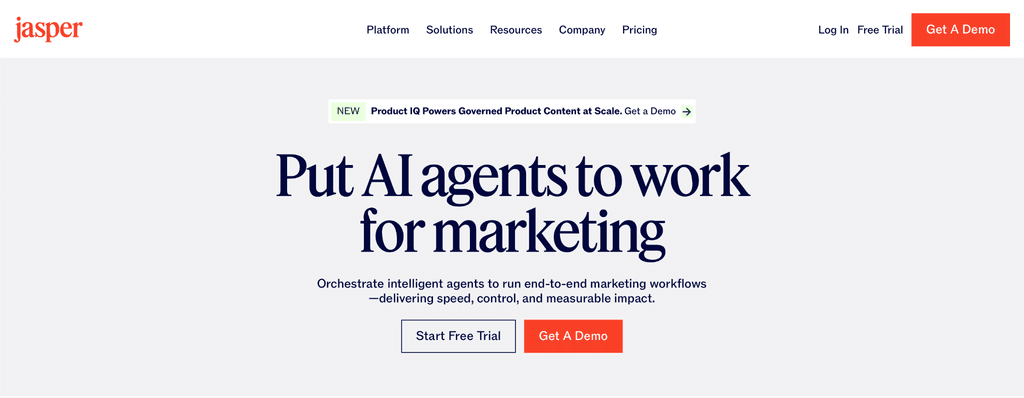
Best for: marketing teams are developing content across a variety of channels.
Jasper is built by considering the marketing workflow and can be used to generate written and visual content on-brand.
The current solutions it provides include marketing oriented AI solutions with the Business tier providing additional controls and customization.
How I tested this tool
I compared Jasper to a standard campaign process: generating a campaign idea, crafting messages, and modifying those messages to fit various marketing channels.
Its best application is in maintaining marketing work in a dedicated atmostphere instead of regarding each task as an individual prompt.
2. Copy.ai
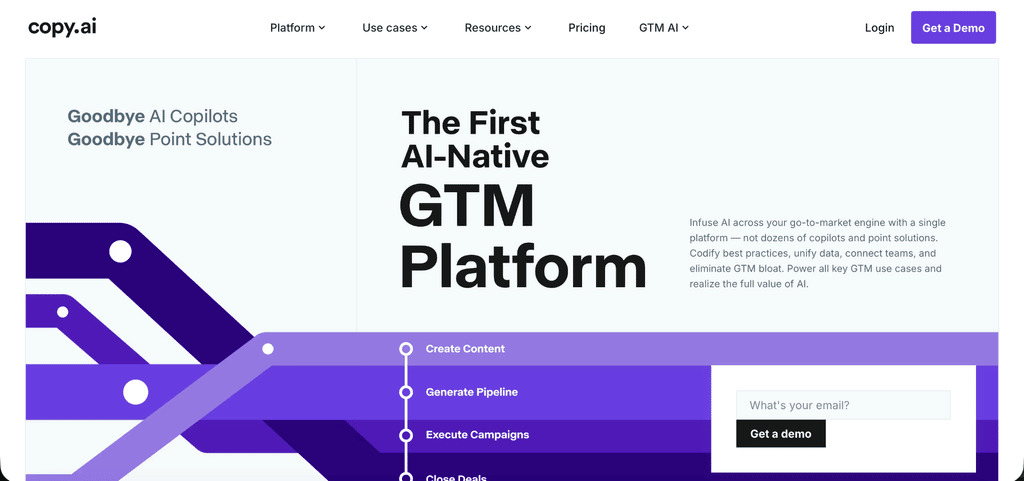
Best for: Go-to-market and marketing teams who automate repetitive processes.
Copy.ai combines AI-based workflow and content generation.
Its existing self-serve packages have unlimited chat and comes with access to various AI models, with additional levels of higher plans comprising of customizable workflows, integrations, and API access.
How I tested this tool
I assessed how well Copy.ai fits a workflow where a marketer needs to move from an initial idea to several related outputs.
The platform is more interesting for teams that want repeatable processes rather than occasional AI-generated copy.
3. HubSpot Breeze
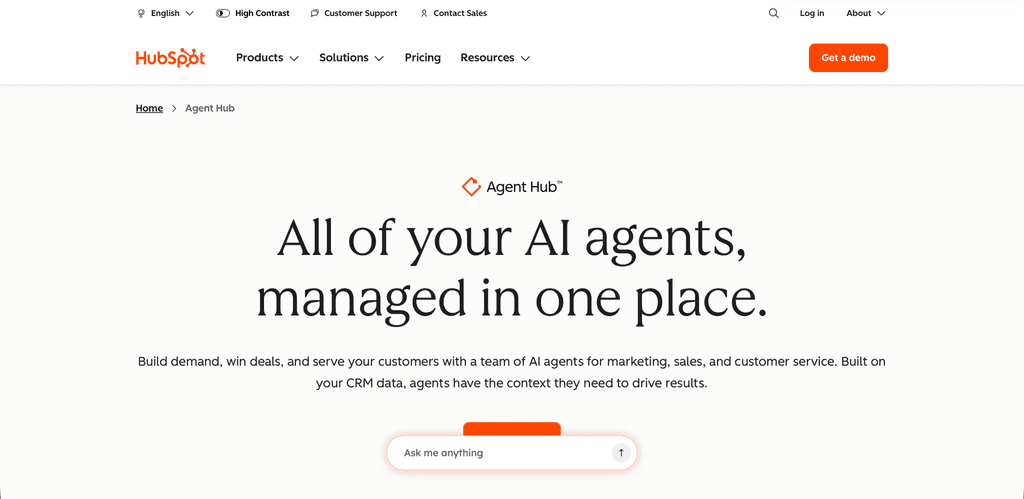
Best for: Businesses already using HubSpot for marketing and CRM.
HubSpot’s Breeze brings AI directly into its customer platform.
Marketing use cases include campaign planning, content creation, audience research, content repurposing, campaign analysis, and AI search visibility.
HubSpot says Breeze Assistant is available across its tools, with additional AI agents and capabilities depending on the subscription.
How I tested this tool
I evaluated Breeze from a CRM-first perspective:
how useful is AI when it can work with customer and campaign context instead of receiving information manually?
That connected-data approach is its biggest distinction from standalone AI tools for marketing.
4. Canva
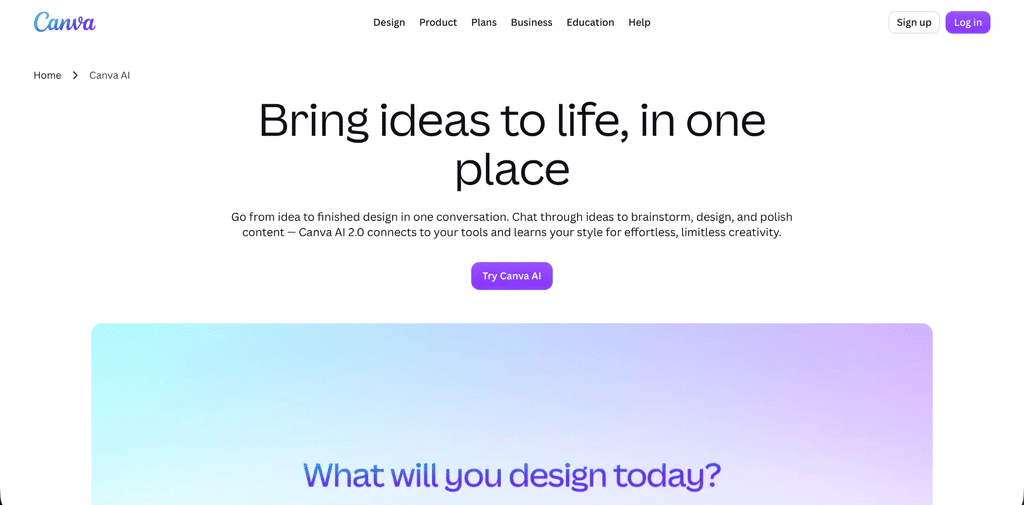
Best for: Social graphics and advertisements, as well as presentations and branded marketing materials.
Canva combines traditional design tools with AI features such as Magic Write, image generation, background editing, design generation, translation, and AI-powered advertising features.
Canva Free is available at no cost, while Pro and Business provide greater AI access and premium content.
How I tested this tool
I viewed Canva as a part of a daily workflow of a marketer: transforming an idea into social graphics, ad creatives, and branded variations.
The major advantage is that AI generation and final design editing happen in the same environment.
5. Adobe Express
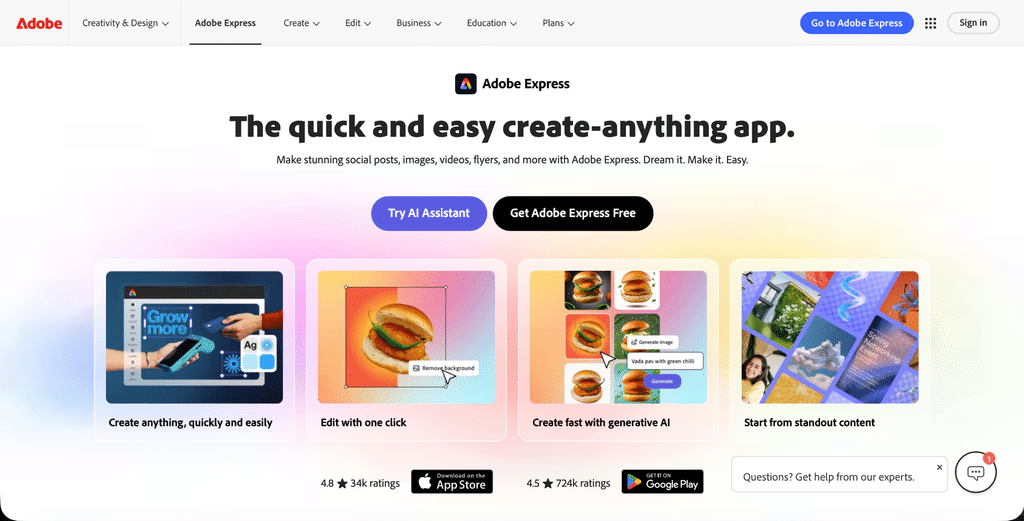
Best for: Marketing professionals who need rapid visual assets and social publishing.
Adobe Express is a mix of templates, editing, generative AI, brand tools, and content scheduling.
Its free version has simple creative tools accessible and limited access to AI, whereas Premium has more generative credits, high-quality assets, brand properties, and extended scheduling.
How I tested this tool
I assessed the speed with which a marketer could travel between an idea of a campaign and completed visual material.
The Adobe Express is mostly helpful when the production of social posts, graphics, short-form video, and branded assets should be produced from one workspace.
6. Semrush
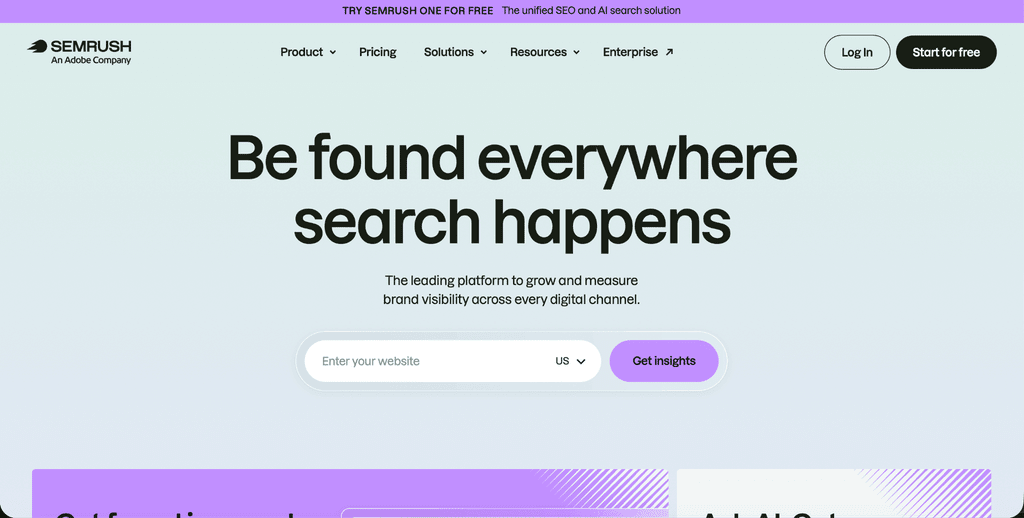
Best for: SEO teams and marketers tracking search and AI visibility.
Semrush has gone beyond the conventional SEO to artificial intelligence visibility.
Its AI Visibility toolkit is a tracker of brand mentions in AI search experiences, such as ChatGPT, Google AI, Gemini, and Perplexity, as well as competitor and prompt research.
How I tested this tool
I evaluated Semrush in the context of a standard SEO process, which includes identifying opportunities, competitor research, and the way a brand is going to be presented in the new AI search results.
It is more valuable for data-led marketers than for teams looking only for content generation.
7. Surfer
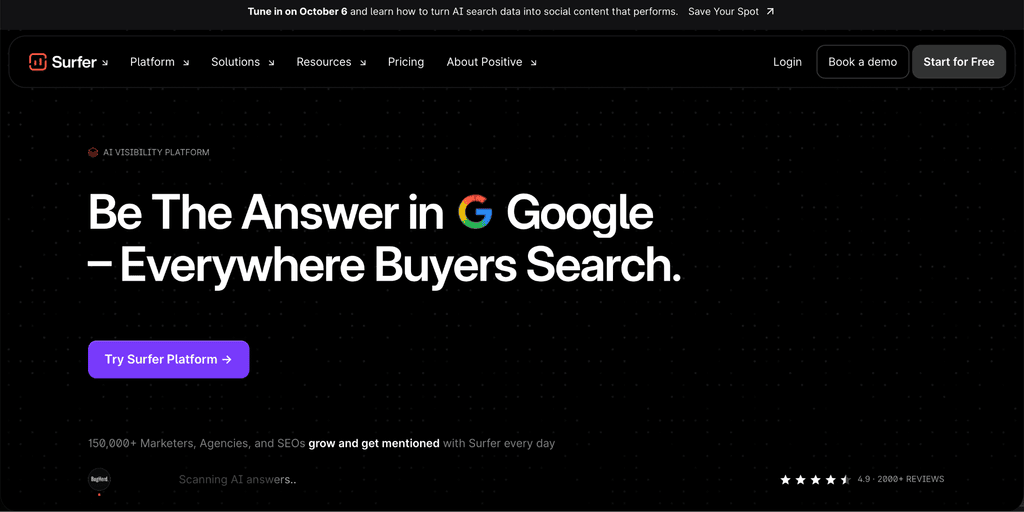
Best for: SEO content teams.
Surfer is a tool that integrates keyword research, content optimization, content auditing, AI writing and AI visibility.
Its latest trial offers Pro services, such as AI writing, keyword research, content audits, and AI visibility.
How I tested this tool
I considered Surfer as a process of getting a target keyword and transforming it into an optimized content brief and draft.
Its key benefit is the integration of AI writing and recommendations to improve the SEO, rather than making content creation as a standalone task.
8. Grammarly
Best for: Marketers who want cleaner, more consistent brand communication.
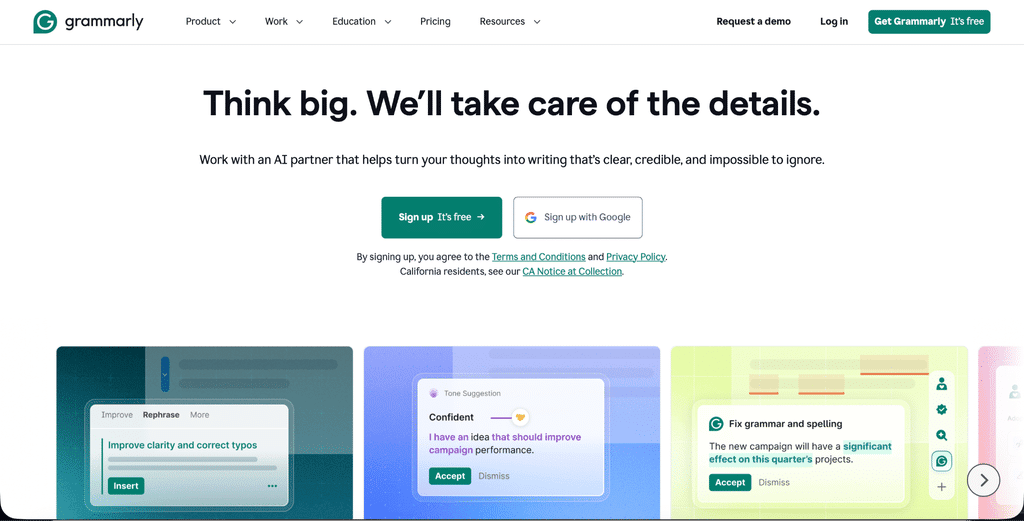
Grammarly’s artificial intelligence tools will enable marketers to brainstorm, write, rewrite and reformat content to be posted in different channels.
Its Brand Tones capability enables organizations to generate tone profiles enabling teams to get feedback based on their brand voice.
How I tested this tool
I tested Grammarly with general marketing text: emails, social content and campaign messages.
Creating a whole campaign at once is not the biggest thing to do; it is improving clarity, tone, consistency, and brand alignment before publishing.
9. Buffer
Best for: Social media marketers.
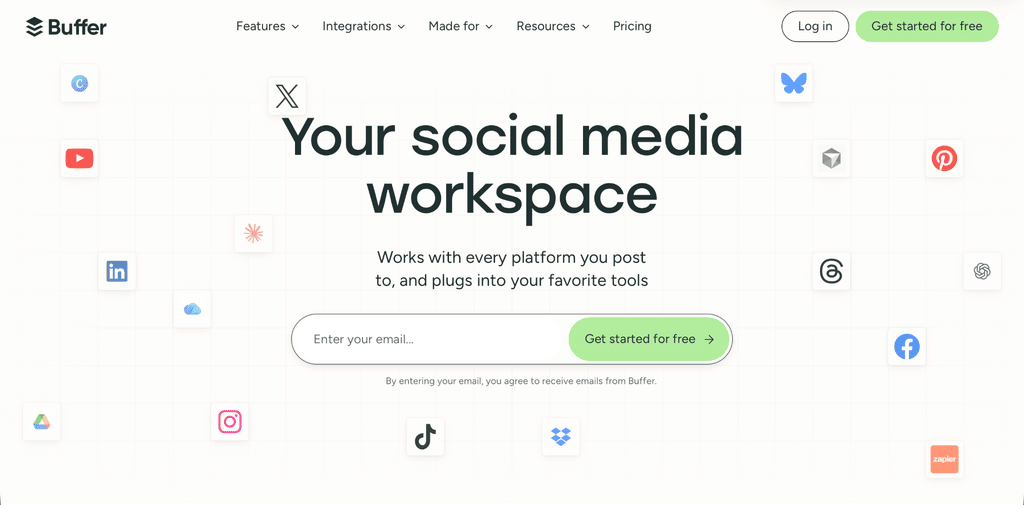
Buffer’s AI Assistant assists with the production of ideas, paraphrasing of information, changing the tone, recycling posts and creating platform-specific variations.
Buffer also offers a free social media post generator and free account options.
How I tested this tool
I assessed the Buffer on the basis of a typical social work process: have a thought, build variations, adapt the message for different platforms, and schedule the posts.
It is most effective when the creation and publication of AI must occur within the same workflow.
10. ChatGPT
Best for: Marketers who require a general-purpose AI assistant with flexibility.
ChatGPT can assist in marketing activities such as planning campaigns and creating content, as well as analyzing performance data and creating variations for testing.
OpenAI specifically points out these marketing workflows, such as the process between ideas and briefs and assets and performance analysis.
How I tested this tool
I tested ChatGPT as a marketing space and not a marketing platform.
It is most powerful in its ability to be flexible: the same discussion can shift from audience research to campaign concepts, copy variations, content analysis, and strategy.
How to Choose the Right AI Marketing Tool
Start with the bottleneck in your marketing workflow.
Tools like Semrush and Surfer are better if your biggest challenge is SEO. Adobe Express or Canva can be more useful in case campaigns are becoming slow due to the visual production.
Buffer has a more specialized workflow in the case of social publishing. Already existing businesses using HubSpot can be interested in maintaining AI as a part of their CRM.
Another option is to use a free AI marketing tool for occasional use or a paid platform for team collaboration, task automation, brand controls, and higher usage limits.
However, the most prominent one would be to see the AI output as the beginning. Verify some facts, brand copy, statistics, facts about customers and campaign messages before posting.
The End
Not all the best AI marketing tools need to produce the most content to become the best.
The useful ones are those that help to get rid of repetitive work and they give time to marketers to create strategies, be creative, test, and understand their customers better.
Jasper and Copy.ai pay much attention to the marketing workflows, HubSpot integrates AI and CRM information, Canva and Adobe Express are used to create visual content, Semrush and Surfer aid the SEO, Grammarly improves communication better, Buffer manages social media, and ChatGPT helps with anything connected to marketing.
The correct decision will ultimately be based upon your current workflow, budget, and team size, as well as the exact marketing activities that you would like AI to undertake.