

A customer calls your business after hours. Nobody answers.
The phone is hung up, and a prospective sale is lost before your sales force even realizes it was an opportunity.
This is the issue that AI voice agents are gradually created to address.
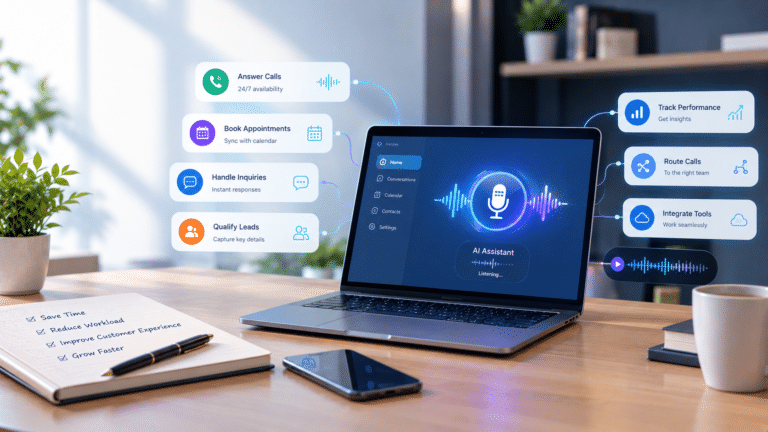
Contrary to the traditional type of IVR, which simply guides the inbound callers through a menu in which they choose a number, the latest voice agent has the ability to comprehend natural speech, respond to queries, qualify leads, make appointments, retrieve business content and even transfer conversations to human agents when required.
The selection of an AI voice agent platform is not as easy as selecting a voice that sounds more human.
Other areas that businesses have to pay attention to include integrations, latency, call routing, and customization, scalability, privacy, and how easily a human can take over.
Here are 10 AI voice agent services for businesses worth considering in 2026.
Key Takeaways
- The best AI voice agent depends on your call volume, technical capacity, integrations, and application.
- Developer-focused platforms such as Vapi and LiveKit provide greater control over the underlying voice stack.
- Retell AI and Synthflow focus on faster business deployment, while PolyAI and Cognigy target larger contact-center environments.
- ElevenLabs is particularly focused on natural, customizable voice experiences.
- Twilio works well for businesses that want to build voice AI around their existing communications infrastructure.
- A private AI voice agent should be evaluated for data handling, access controls, deployment options, and integration with your existing systems.
- Test real conversations before deployment. Latency, interruptions, unclear speech, and human handoffs can behave differently in production than in a demo.
Best AI Voice Agent Services for Businesses
| Platform | Best For | Approach | Business Use Cases |
| Retell AI | Production voice agents | Platform + API | Support, sales, scheduling |
| Vapi | Developers | Modular infrastructure | Custom agents, automation |
| Bland AI | Outbound calling | Phone-agent platform | Sales, qualification |
| Synthflow | No-code teams | Visual builder | Receptionist, support |
| ElevenLabs | Voice quality | Voice + agent platform | Support, sales, multilingual calls |
| PolyAI | Enterprise contact centers | Managed voice AI | Customer service |
| Cognigy | Large enterprises | Conversational AI platform | Contact centers |
| Twilio | Custom communications | Voice infrastructure | Support, routing, automation |
| Voiceflow | Conversational design | Visual agent builder | Phone support, qualification |
| LiveKit | Technical teams | Real-time AI infrastructure | Custom voice applications |
1. Retell AI
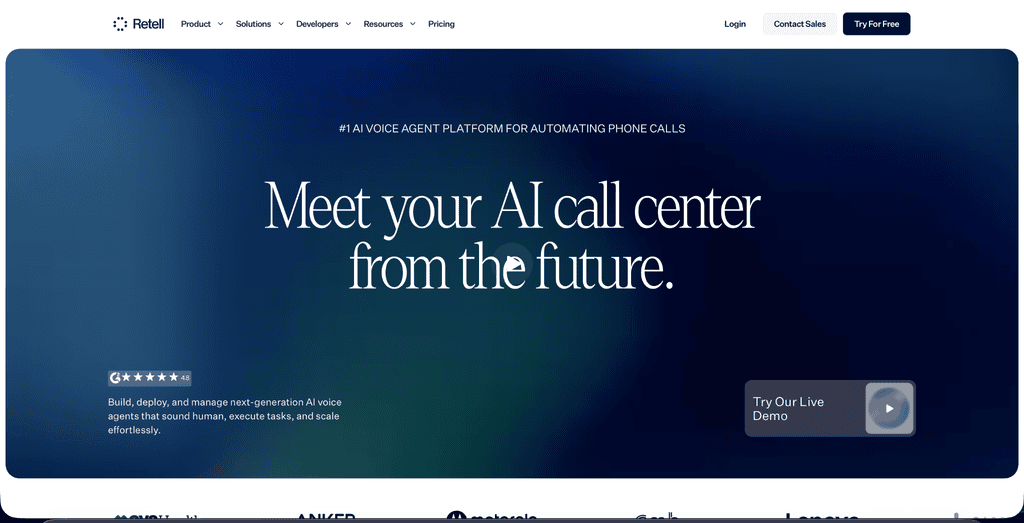
Best for: Businesses building production-ready inbound and outbound voice agents.
Retell AI provides tools for creating, testing, monitoring, and deploying voice agents.
Its platform supports no-code configuration as well as API-based development, with integrations for telephony and business workflows.
What I found while evaluating it
Retell stands out when the goal is to move beyond a simple phone bot.
Its combination of testing, function calling, telephony, and deployment tools makes it suitable for businesses that need an agent connected to real workflows rather than just answering FAQs.
2. Vapi
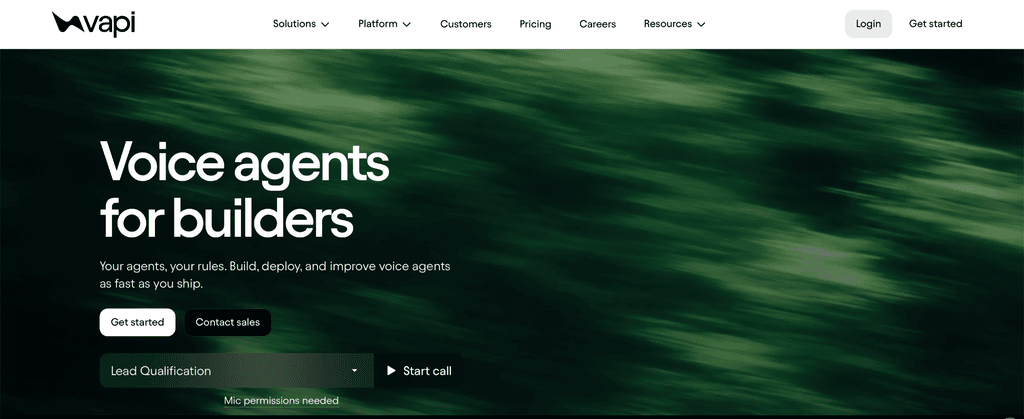
Best for: Developers who want control over their voice-agent stack.
Vapi is a developer-oriented AI voice agent platform that provides APIs and infrastructure for building voice applications.
It allows teams to customize models, speech providers, tools, and telephony rather than locking the entire system into one stack.
What I found while evaluating it
Vapi makes the most sense when your engineering team wants flexibility.
The trade-off is that more control generally means more responsibility for configuration, testing, integrations, and ongoing maintenance.
3. Bland AI
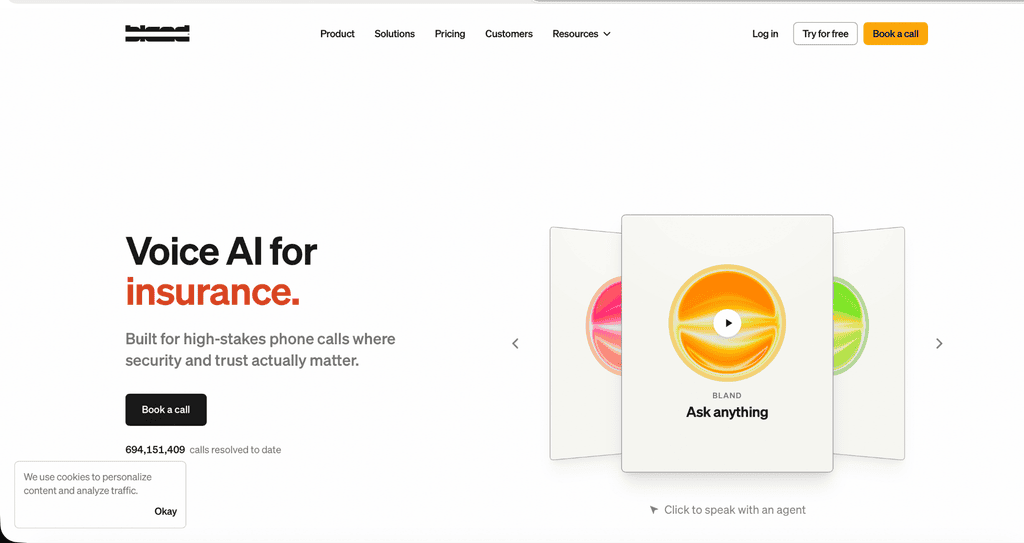
Best for: Businesses focused on automated outbound phone operations.
Bland AI provides phone-based AI agents designed for tasks including outbound campaigns, lead qualification, and customer conversations.
Current comparisons identify it as particularly relevant for developer-controlled, high-volume outbound workflows.
What I found while evaluating it
Bland is worth looking at when outbound volume is central to the project.
Companies ought to thoroughly assess their calling practices, permission regulations, disclosures, and any applicable U.S. telemarketing standards before commencing.
4. Synthflow
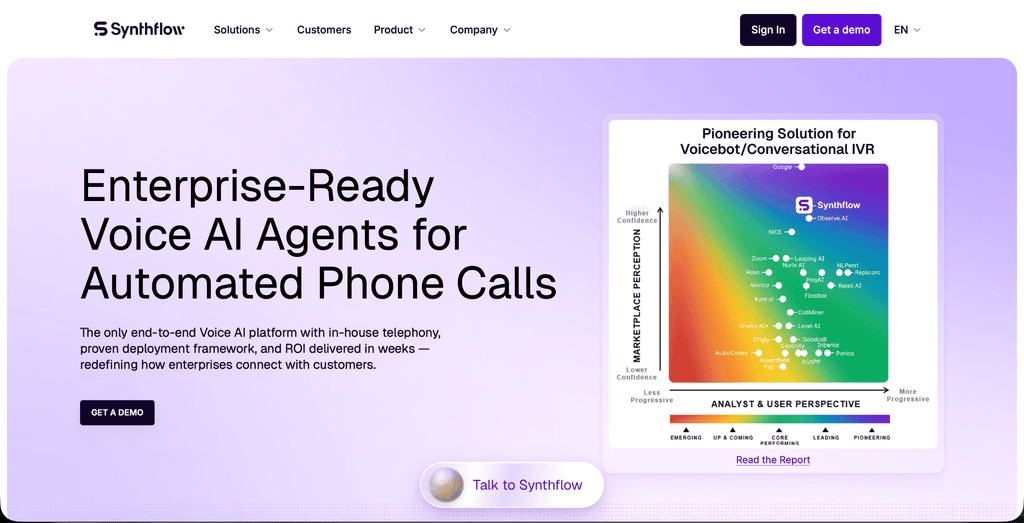
Best for: Nontechnical teams and agencies that want a visual builder.
Synthflow focuses on creating voice agents without requiring businesses to build every component from scratch.
Its platform is aimed at use cases such as customer service, appointment booking, lead qualification, and business phone automation.
What I found while evaluating it
The major attraction is the lower technical barrier. A business can focus more on designing the conversation and less on building the underlying voice infrastructure.
Careful testing is important with complex workflows where you will need multiple integrations or unusual call paths.
5. ElevenLabs
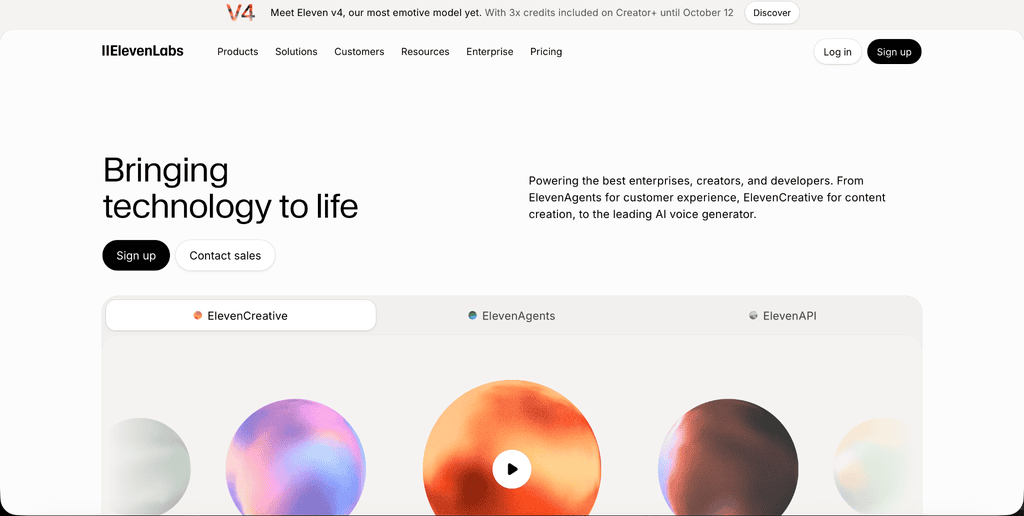
Best for: Businesses where natural voice quality and multilingual conversations matter.
ElevenLabs has expanded from voice generation into conversational AI through ElevenAgents.
Its current platform supports voice and chat agents, business workflows, and deployment in more than 70 languages.
Businesses can customize pronunciation, speaking speed, voices, and other speech characteristics.
What I found while evaluating it
The platform is especially interesting when the voice itself is a component of the customer experience.
Companies with branded, multilingual, or customer-facing agents should also test pronunciation, interruption management, and escalation first before making a massive deployment.
6. PolyAI
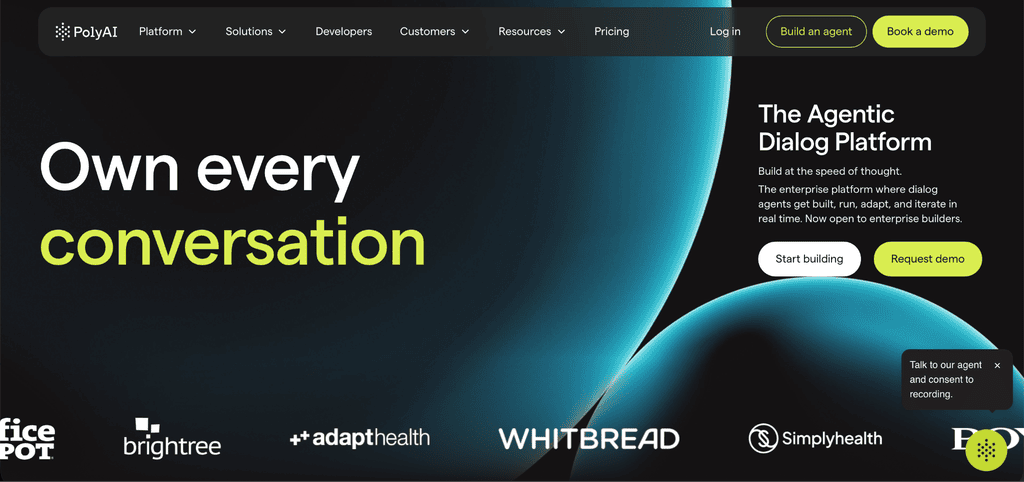
Best for: Large businesses with high-volume customer-service calls.
PolyAI specializes in enterprise voice assistants compatible with the existing contact-center and telephony infrastructure.
It also supports integrations with platforms, including Five9, NICE CXone, Twilio Flex, Amazon Connect, Genesys and others.
What I found while evaluating it
PolyAI is better suited to organizations thinking about voice automation at contact-center scale rather than simply replacing a receptionist.
Its current integrations might be quickly valuable to businesses that are not inclined to substitute their entire contact-center stack.
7. Cognigy
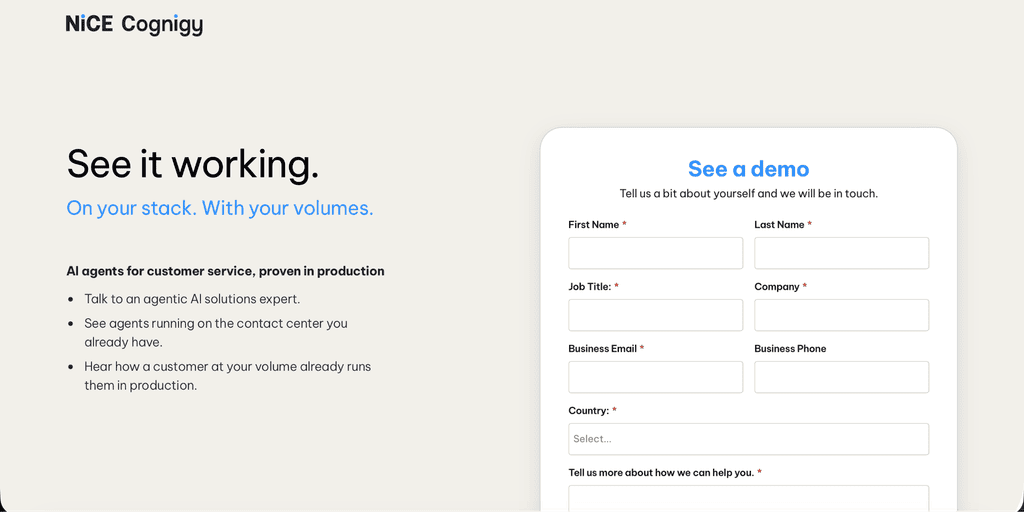
Best for: Enterprises with complex contact-center environments.
Cognigy provides conversational AI and agent-assistance capabilities across voice and messaging.
Its Agent Copilot can retrieve CRM information, interaction history, and other context to support human representatives during customer conversations.
What I found while evaluating it
Cognigy is better suited to enterprises that already have well-developed customer-service infrastructure.
One of the main factors attracting the attention of organizations that do not need to replace all of their platforms is its compatibility with existing contact-center settings.
8. Twilio
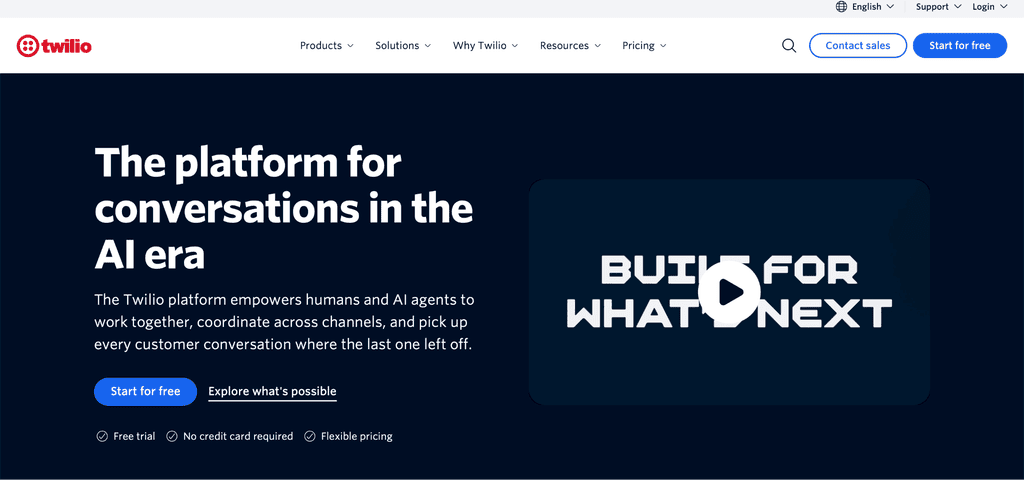
Best for: Businesses and developers building customized voice AI solutions.
Twilio provides communications infrastructure that businesses can connect with their own AI models and applications.
Its current Voice AI offering includes tools for real-time audio, customer context, AI-to-human handoffs, and automated customer support.
What I found while evaluating it
Twilio is less about giving you a finished receptionist and more about giving technical teams the building blocks to create one.
That makes it attractive for businesses that need custom call flows, existing Twilio infrastructure, or deeper control over their application architecture.
9. Voiceflow
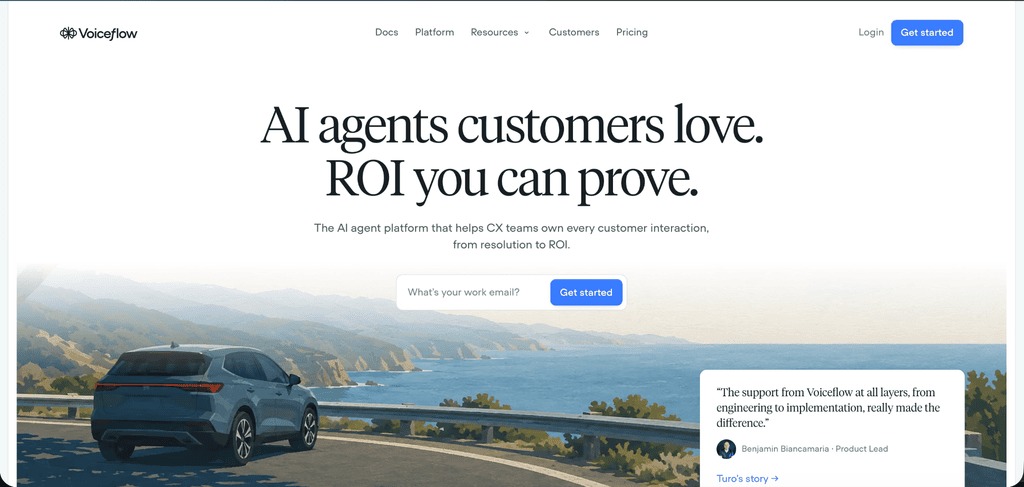
Best for: Teams that want to visually design and test conversational phone experiences.
Voiceflow provides tools for building AI phone agents that can answer and make calls, understand caller intent, complete workflows, and route conversations with context.
What I found while evaluating it
Voiceflow is particularly useful when conversation design is a major part of the project.
Its visual approach can make it easier for teams to map complicated customer journeys before connecting them to production phone systems.
10. LiveKit
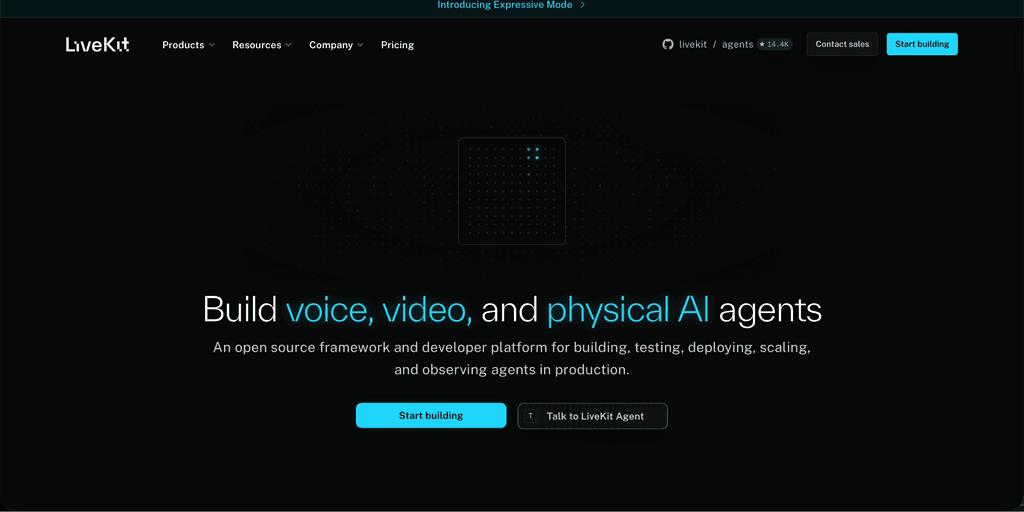
Best for: Engineering teams building highly customized real-time voice applications.
LiveKit is positioned as real-time infrastructure for AI agents rather than a traditional business phone system.
Its architecture is relevant for teams that want deeper control over the components powering their voice experience.
What I found while evaluating it
LiveKit is most interesting for technical teams that want to build rather than simply configure an AI voice agent.
Such flexibility is useful to specialized applications, but it implies that your team must have the engineering capacity to maintain the application and deployment stack around it.
Final Thoughts
The market for AI voice agent services for businesses has moved well beyond basic automated phone trees.
Today’s platforms are capable of carrying out conversations, integrating with business systems, completing tasks and sending out more intricate situations to human employees.
It will all depend on what you are constructing.
Vapi and LiveKit provide more technical control, Synthflow and Voiceflow ease conversational design, Retell and Bland put much emphasis on production phone automation, and PolyAI and Cognigy are aimed at enterprise contact-center operations.
ElevenLabs is very customizable on voice and Twilio offers custom communication infrastructure.
Before choosing the best AI voice agent for your business, run realistic calls, not just demos and measure response speed, accuracy, integrations, escalation quality, privacy controls, and total operating cost.